DE | EN
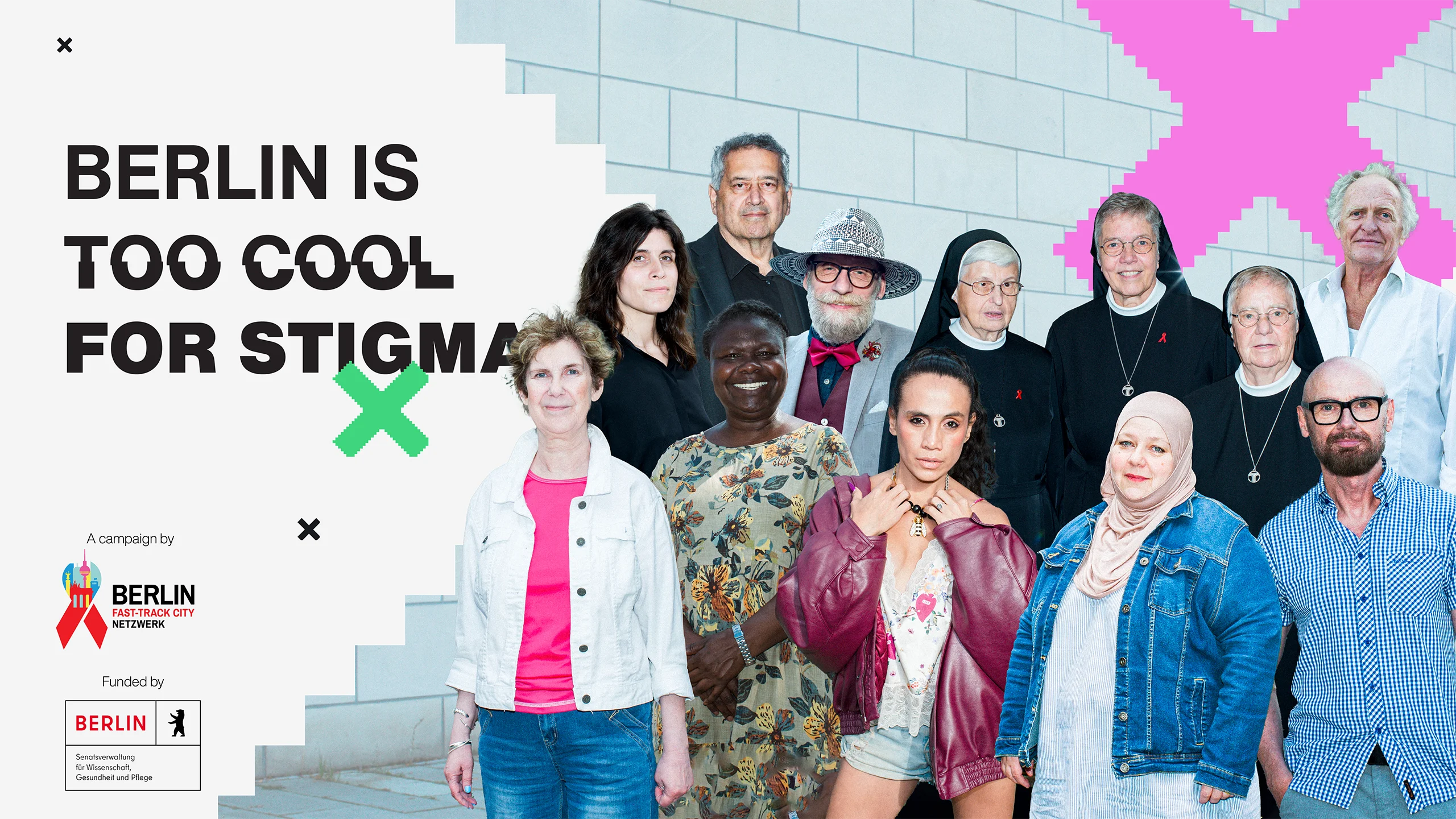
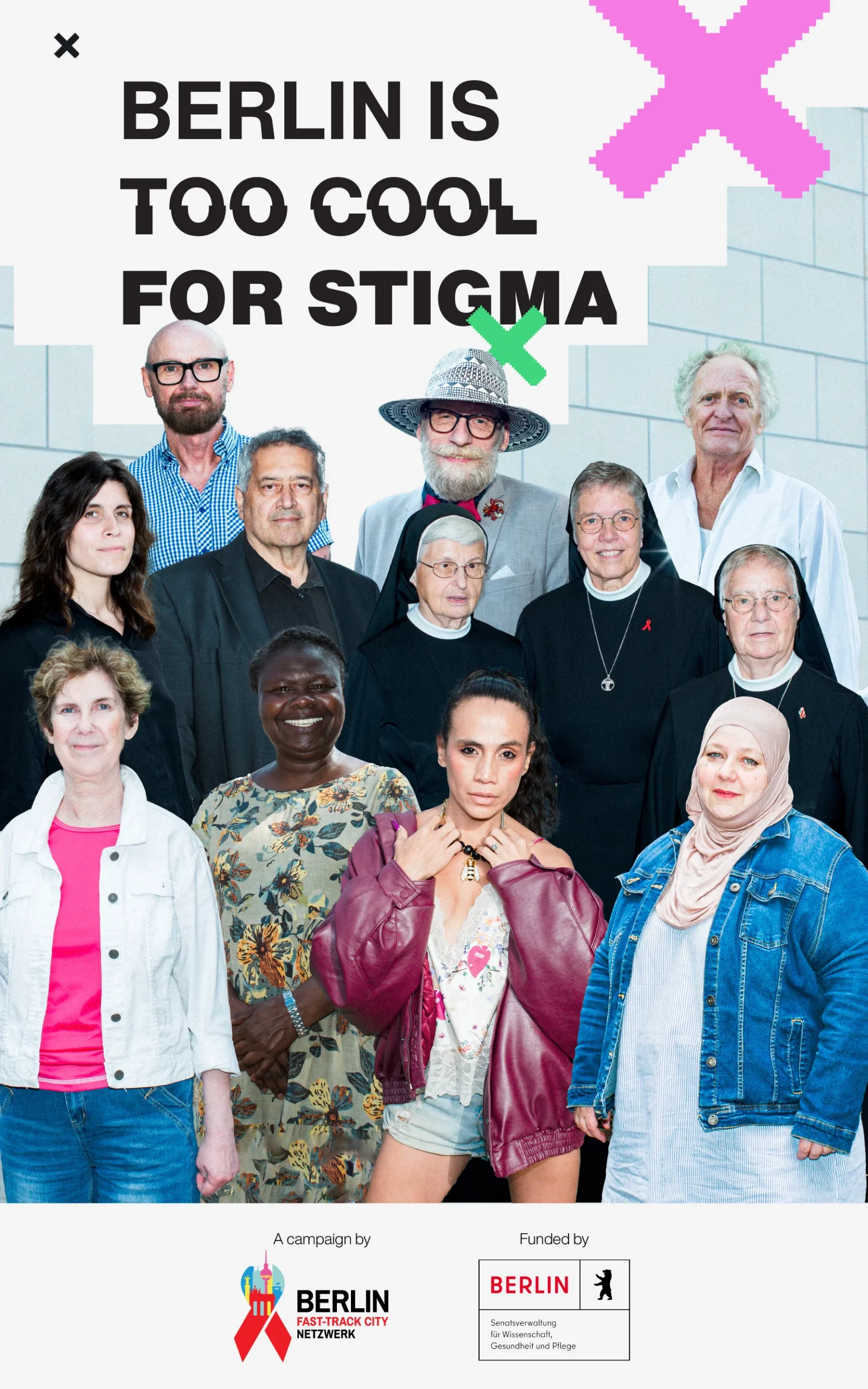
Is Berlin really too cool for HIV stigma?
Not really. It happens all over: at the doctor’s, at work, at the sports club, and often right out on the street.
That’s not okay – and it doesn’t have to be this way. For real! It makes life harder for people living with HIV, and people who are HIV-negative don’t learn anything from it.
But there are three simple things you can remember that really help fight HIV stigma:
1.
U=U: Undetectable equals untransmittable. This means: 94 percent of all people living with HIV in Berlin know about their infection (data from 2024), and the vast majority of them are on highly effective treatment. That treatment ensures the virus is no longer detectable in their blood. And as a result, it can no longer be transmitted through sex – even without a condom.
2.
You can’t tell if someone has HIV just by looking at them. People living with HIV are everywhere – in your workplace, at your sports club, maybe even in your family. They’re sitting next to you at restaurants, on public transportation, and on park benches. They work, go shopping, and take their kids to school. They’re young, old, chubby, thin, short, tall, loud, and quiet. And they look completely normal and healthy. Because that’s almost always the case. So, there’s no reason to exclude them from anything.
3.
Thinking along with others, empathizing with them, and sharing their knowledge helps. A lot has changed around HIV over the past 30 years. Are you up to date? Yes? Great! No? That’s what this campaign is for.
Our campaign
We spoke with people living with and without HIV about what causes stigma, how we can eliminate it, and what needs to be done to achieve that. Because unless we end HIV stigma, we won’t reach our goal of ending AIDS in Berlin by 2030.
You can find the videos we created here and on our Instagram profile, ftcn.berlin.
Get informed!
More information about HIV and stigma
Reports and Studies
Positive Stimmen 2.0
A participatory study on discrimination against people living with HIV in Germany and how stigma affects their lives.
DAH · 2021 · German
PLHIV Stigma Index
Global Study on HIV Stigma. The interactive platform shows the situation in various countries. “Positive Stimmen 2.0” is its German version.
Ongoing · English
Stigma in the healthcare system
Report by the European Centre for Disease Prevention and Control (ECDC) on HIV stigma in the healthcare system.
ECDC · 2024 · English
Positive Stimmen 2.0
Positive Stimmen 2.0
Partizipative Studie zur Diskriminierung von Menschen mit HIV in Deutschland und wie sich Stigma auf ihr Leben auswirkt.
Deutsche Aidshilfe · 2021
PLHIV Stigma Index
PLHIV Stigma Index
Weltweite Studie zu HIV-Stigma. Die interaktive Plattform zeigt die Lage in verschiedenen Ländern. Positive Stimmen 2.0 ist ihre deutsche Umsetzung.
Fortlaufend · Englisch
Stigma im Gesundheitswesen
Stigma im Gesundheitswesen
Bericht des European Centre for Disease Prevention and Control (ECDC) zu HIV-Stigma im Gesundheitswesen.
ECDC · 2024 · Englisch
Videos about “Positive Stimmen 2.0”
All the Facts About HIV Discrimination
Together Against HIV Discrimination
Presentation of the Study Results
Campaigns and Initiatives
World AIDS Day
Annual campaign around December 1: in solidarity with people living with HIV and against stigma and discrimination.
HIV Discrimination Contact Center
The contact center provides information, counseling, and support regarding HIV-related discrimination.
Welt-Aids-Tag
Welt-Aids-Tag
Jährliche Kampagne rund um den 1. Dezember: für Solidarität mit Menschen mit HIV und gegen Stigma und Diskriminierung.
Kontaktstelle HIV-Diskriminierung
Kontaktstelle HIV-Diskriminierung
Die Kontaktstelle bietet Informationen, Beratung und Unterstützung rund um HIV-bezogene Diskriminierung.
#positivarbeiten
#positivarbeiten
Arbeitgeber*innen verpflichten sich zu einem diskriminierungsfreien Umgang mit Kolleg*innen mit HIV.
A campaign by
Funded by
The Fast-Track City Network—a coalition of NGOs, counseling centers, medical facilities, and community organizations—has been working for years to combat HIV stigma in Berlin. This year, we are launching a media campaign. We spoke with people living with and without HIV about what stigma does, how we can get rid of it, and what needs to be done to achieve that. Because unless we end HIV stigma, we won’t reach our goal of ending AIDS in Berlin by 2030.
Production
Design, Direction, and Editing: Michel Steinberg
Camera: Juan Fernandez Gebauer und Patricio Trim
Interviews: João d’Orey
Photo: Camila Pozner
Motion Graphics: Ennie Petersen
Music: Wszebor Sienkiewicz
Subtitles and Translations: Simon Wittenstein